Saturday, 16 February 2008

Curriculum Making from Cambridge: using Local Studies

Sharing a personal `Learning Journey’

Sue Kelly, a teacher from King’s Lynn, shares how she embarked on the process of learning to use the software programme `Local Studies' through this PowerPoint.

Sue attended the second round of the Geographical Association Curriculum Making Conferences in Cambridge. (These CPD events were offered as part of the Action Plan for Geography.) The Primary ICT sessions were developed around the use of Local Studies Software (Soft Teach Education) andteachers who attended the first day of the course needed to go onto develop their own understanding of the programme in order to use it with children they would be teaching.


If anyone else has developed resources using Local Studies software that they would be willing to share - please e-mail me at wnorth@geography.org.uk.

Tuesday, 29 January 2008

Geography & Food: starting from stories

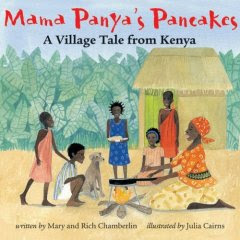
Stories provide a wonderful way of proving the `hook' that gets children engaged with learning. The PowerPoint focuses on some of the books I've used and enjoyed and suggests ways that geographical understanding can be developed through story.


Monday, 28 January 2008

Workshop: Geography & Food

My workshop focus for the Outwood Pyramid Conference on the 25th January was `Geography and Food'. This was a shared workshop aimed to encourage teachers to make links between geography and `food preparation. (More cooking/ healthy eating than food technology.)

The PowerPoint that I used to summarise the focus of my planning is shown below:


There are a number of projects linked to food and farming on the Oxfam Education website, including Making a Meal of It. Activity 5: Unpacking the supermarket bag is referred to on slide 6 of the presentation.

There are lots of links to online materials for teaching about food. Some are strongly geography focused while others focus more clearly on other curriculum areas, e.g. science. I'll be sharing some of these links on this blog over the next few weeks. If you have successfully taught geography through a food topic why not contribute your ideas.

Reflections on a Primary Cross-Curricular & Creativity Conference

On Friday 25th January I took part in a conference for a pyramid of Wakefield schools. What follows are a few of my thoughts linked to the keynote presentation.


The first thing that strikes me is the influential role of some of the independent educational consultancies in shaping the direction that primary schools take when reviewing their curriculum. In this case our conference was led by a well regarded keynote speaker from a prominent commercial education consultancy. I heard some conflicting messages.

Some were excellent, i.e. we need to provide `hooks’ at the beginning of a new (topic/ unit/ theme/ project) to ensure children engage with the learning; use questions to focus learning; engage with the local area; help children to make connections about their learning experiences so that they are joined up and make sense in their minds; provide opportunities for pupils to share `what they know’, e.g. through making a video to show to other children in the school.

While others messages appeared muddled, i.e. the synonymous use of literacy/ English and numeracy/ mathematics; the use of sub-grades in subjects such as geography (what exactly does a 5c look like?) and very definitely the Primary School Year 3 planning for geography, `How will Global Warming change my life?’

[I want to return to two of these areas, i.e. the ones that relate to assessment in geography and to Global Warming in a later entry.]

So, do the solutions to the primary curriculum lie with the published advice and guidance that commercial educational organisations provide or do the solutions lie with teachers in the classroom who know their pupils and want to provide a curriculum that starts with the child and takes into account the needs of the child and the community in which the child grows up?

Wednesday, 23 January 2008

Books & websites for developing an understanding of Global Citizenship and Education for Sustainable Development

It was great to meet so many enthusiastic teachers at yesterday's Quality Geography Conference in London.

One of the things we discussed was using books as starting points for learning in geography and I offered to make a book and website list available through this site. Click on the link below (green text) to access a WORD document which lists a selection of books and websites on the theme:

Global Citizenship and Education for Sustainable Development


Sunday, 20 January 2008

Young Geographers - access to Word documents


The Word documents that were shared on the first day of the Young Geographers Project in Sheffield can be accessed by clicking on the highlighted link.

See below for access to PowerPoint presentations from the day.

Saturday, 19 January 2008

Planning with `big ideas'

The focus for the second session of the `Young Geographers' project was `Planning with `big ideas' or key concepts. (See below for the introductory post on this subject.)

Currently KS3 are being asked to focus their planning for geography around key concepts. Paula Owens (my job share partner) and I have been thinking about whether a similar approach could be useful in the primary school. We believe that the use of `concepts' as a planning tool might help ensure that geography does not disappear from the curriculum if schools move towards cross-curricular approaches to learning.

The first half of the presentation exemplifies the idea of planning from key concepts or `big ideas.

The second half of the presentation shows `Living Geography' in action in school.

The last three slides provide guidance for project members on the format for writing up their materials to be included on the GA project page - Young Geographers